

Looking for 1980s AI photo prompts? These ChatGPT prompts can turn your everyday photos into authentic retro-style images, including family snapshots, VHS freeze-frames, studio glamour shots, and film-poster art. With just one photo and a well-written prompt, you can recreate a variety of classic 1980s looks.
We tested and refined these 10 prompts to help preserve the person’s natural appearance, so your result still looks like you rather than a generic AI-generated face.
Before You Try These 1980s AI Photo Prompts Ideas
Upload one clear, front-facing, well-lit photo first, then paste a prompt as a **reply to that same photo** – pasting into a blank chat with no image attached is the #1 reason people get a random stock-style face back instead of an edit of their own.
10 Original 1980s AI Photo Prompts Ideas for ChatGPT
1. A Vintage Bollywood Love Story
Before
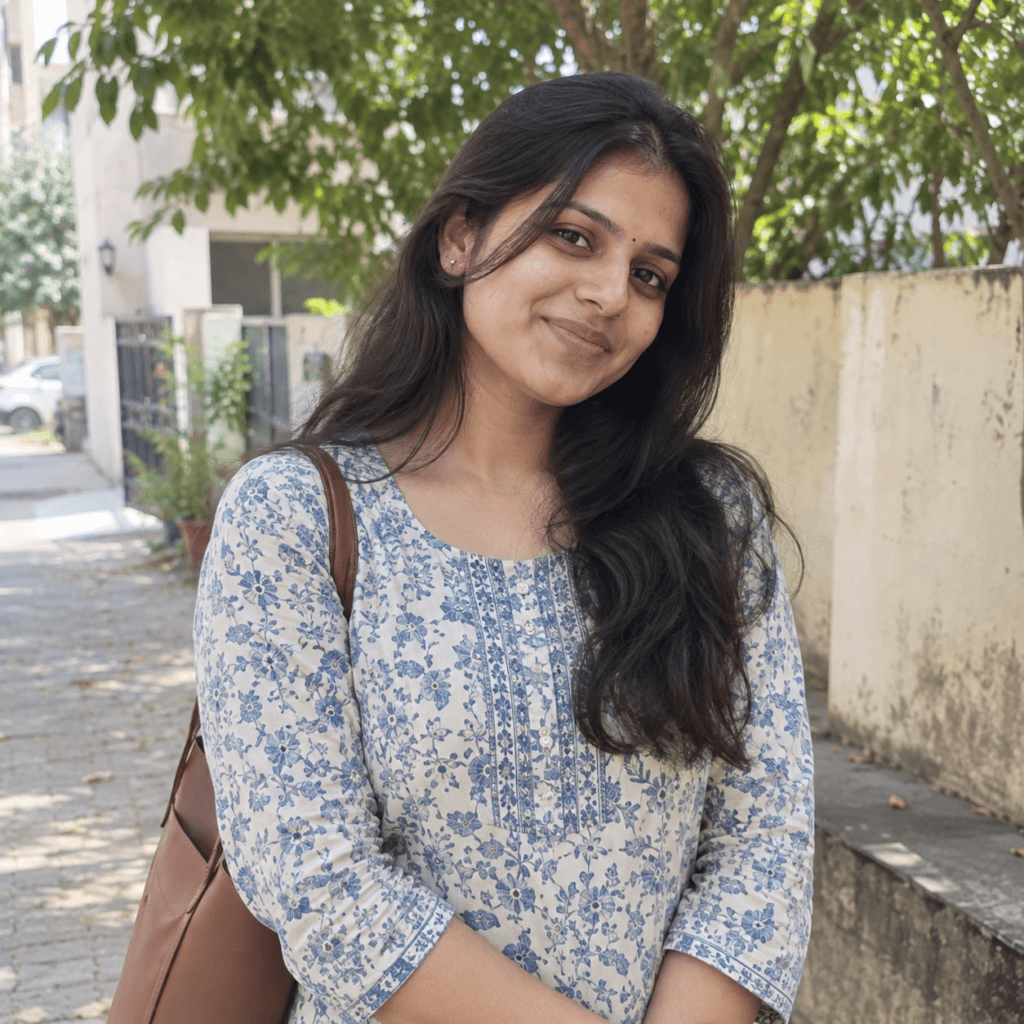
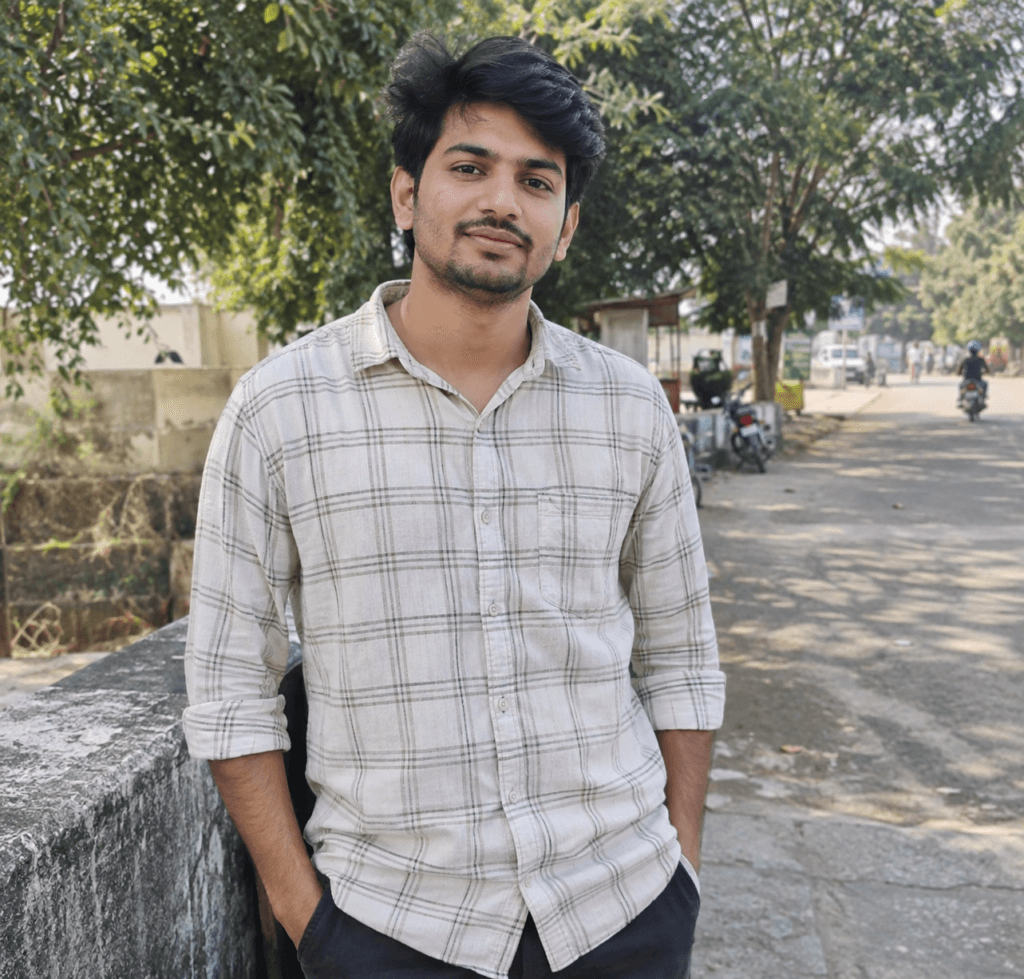
After
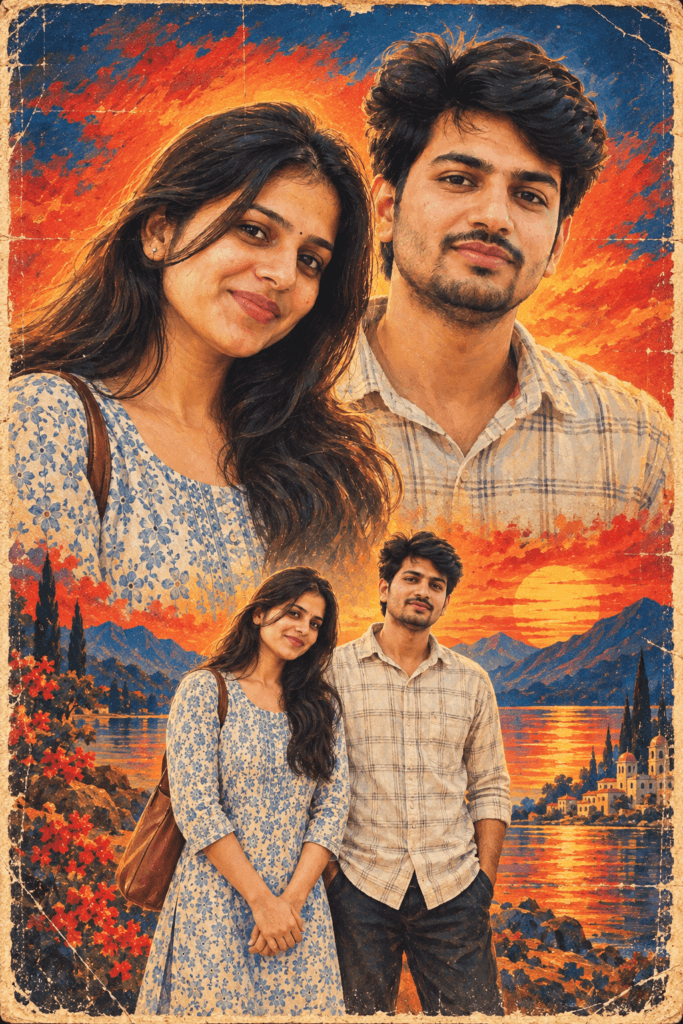
Using the uploaded photo as the ONLY identity reference, create a vintage hand-painted Bollywood movie poster in the EXACT SAME visual style, composition, layout, framing, color palette, and artistic treatment every time.
IMPORTANT:
The uploaded person/persons are the ONLY variable. Do not invent a new poster concept for each generation. Recreate the same fixed poster design described below.
FIXED POSTER DESIGN:
Create a vertical 2:3 portrait poster.
TOP / MAIN AREA:
Place a large painted portrait of the uploaded person/persons occupying approximately the upper 60% of the poster. If there are two people, show both as large portraits together, side-by-side or naturally overlapping. Keep their faces large, clearly visible and recognisable. Do NOT make them kiss, hug romantically, look lovingly at each other, or create a romantic pose. They should simply look natural and neutral/confident, like characters appearing on an old movie poster.
LOWER AREA:
Place one smaller full-body or half-body version of the SAME uploaded person/persons in the lower-center portion. Keep the pose natural and simple. Do not create romantic interaction.
BACKGROUND:
Use a fixed dramatic painted background: warm orange and red sunset sky, deep blue painted areas, distant mountains,
a calm lake or water with reflections, small distant buildings, and subtle greenery/flowers. Keep this same type of background and arrangement in every generation.
STYLE:
Authentic old 1980s Indian Bollywood hand-painted movie poster. Traditional manually painted Indian cinema poster aesthetic. Visible oil-paint brush strokes. Hand-painted facial details. Slightly rough painted edges. Aged paper texture.
Faded ink and subtle printing imperfections. Vintage distressed poster surface. Bold saturated orange, red, yellow and deep blue palette. Strong highlights and shadows. Dramatic but natural painted lighting.
IMPORTANT — NOT ROMANTIC:
This is NOT a romantic couple poster. Do NOT add kissing. Do NOT add hugging. Do NOT add forehead touching. Do NOT make the man and woman gaze romantically at each other. Do NOT add hearts, roses, romantic symbols or romantic gestures. Do NOT create a love-story scene.
If two people are present, portray them simply as two characters standing naturally together.
IDENTITY LOCK:
Preserve the exact facial identity of every person from the uploaded reference. Do not change face shape, forehead, eyebrows, eyes, nose, lips, jawline, ears, skin tone, hairstyle, facial proportions or distinctive facial characteristics.
Do not beautify or redesign the faces. Do not make them look like different people. The faces must remain clearly recognisable even though they are rendered as paintings.
CLOTHING:
Keep the original clothing from the uploaded photo as closely as possible. Do not randomly change the person’s clothing into a different outfit.
STRICT VISUAL CONSISTENCY:
Use the SAME composition every time. Use the SAME poster proportions every time. Use the SAME visual hierarchy every time. Use the SAME color palette every time. Use the SAME background style every time. Use the SAME placement of large portraits and smaller figures every time. Do not improvise. Do not create a different poster layout. Do not add new characters. Do not add random props. Do not add motorcycles, cars, weapons or unrelated objects.
PAINTING ONLY:
The final result must look like a real vintage Bollywood poster painted by a human poster artist. It must NOT look like a photograph. It must NOT look like a modern AI digital illustration. Use strong traditional brushwork and aged printed-poster texture.
NO TEXT:
Absolutely no text anywhere. No movie title. No actor names. No credits. No letters. No logos. No watermark. No typography.
The final image should follow ONE fixed vintage Bollywood poster template, with only the uploaded person’s identity changing.
2. 1980s Bollywood Photo Transformation Prompt
Before
After
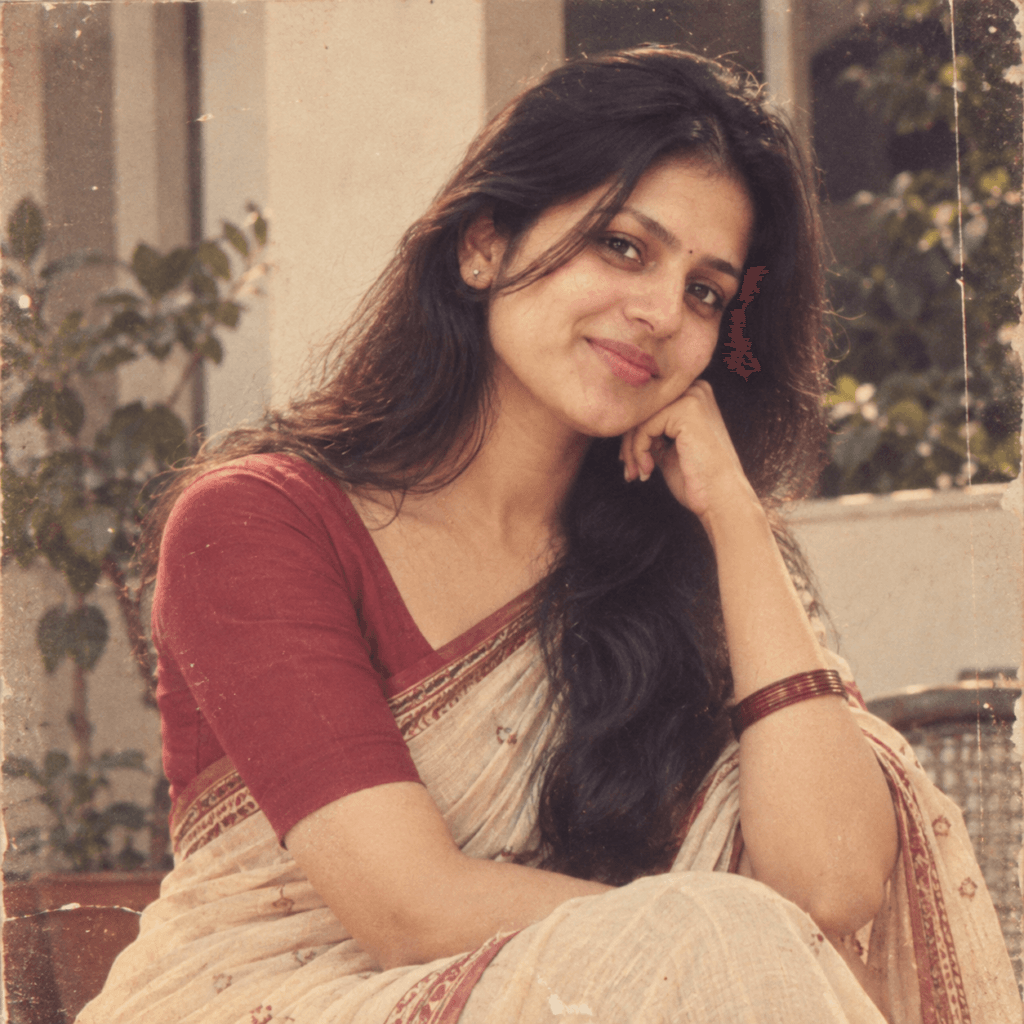
Transform the uploaded photo into an authentic 1980s Indian Bollywood photograph.
STRICT IDENTITY PRESERVATION:
Keep the person’s exact facial identity, facial structure, face shape, forehead, eyebrows, eyes, nose, lips, jawline, ears, skin tone, natural facial proportions and recognizable features unchanged. Do not beautify, reshape, replace or redesign the face. The person must remain immediately recognizable as the same person from the uploaded photo.
80s LOOK:
Give the person an authentic late-1970s to 1980s Indian Bollywood appearance, inspired by vintage Hindi cinema publicity photographs and film magazine portraits.
Use natural 1980s hair styling appropriate to the person’s gender and appearance:
voluminous but realistic hair, natural side-parting, slightly feathered texture and authentic period styling.
CLOTHING:
Replace modern clothing with simple, authentic 1980s Indian fashion.
Use period-appropriate shirts, high-waisted trousers, sarees, salwar suits, kurtas or other realistic Indian clothing depending on the person.
Avoid modern fashion, modern logos, modern sneakers and contemporary accessories.
PHOTOGRAPHY:
Make it look like a genuine photograph taken in India during the 1980s on an analogue 35mm film camera.
Use:
warm soft studio/daylight,
slightly muted but rich colours,
subtle warm colour cast,
natural skin texture,
soft focus,
realistic shadows,
gentle lens softness,
visible but fine 35mm film grain,
slight film halation,
tiny natural exposure imperfections,
subtle print fading,
very mild film scratches.
COMPOSITION:
Keep the photograph simple and believable.
Use a straightforward portrait composition with the person naturally posing for a vintage film publicity photograph.
Do not make it look like a modern fashion photoshoot.
Do not create an exaggerated cinematic action scene.
Do not create a fantasy background.
BACKGROUND:
Use a simple authentic 1980s Indian setting such as an old studio backdrop, modest home interior, vintage Indian street, old building veranda or simple outdoor location.
Keep the background slightly soft and naturally photographed.
REALISM:
The final image must look like an actual old photograph discovered in a 1980s family album or Bollywood film archive.
It must NOT look AI-generated, digitally painted, overly sharp, HDR, glossy, cinematic-modern or plastic.
IMPORTANT:
Do not add unnecessary props.
Do not add extra people.
Do not add text.
Do not add movie titles.
Do not add logos.
Do not add watermarks.
Do not change the person’s identity.
The final result should feel like a genuine 1980s Indian photograph rather than a modern photograph with an 80s filter.
3. 80s Bollywood Retro Look
Before
After
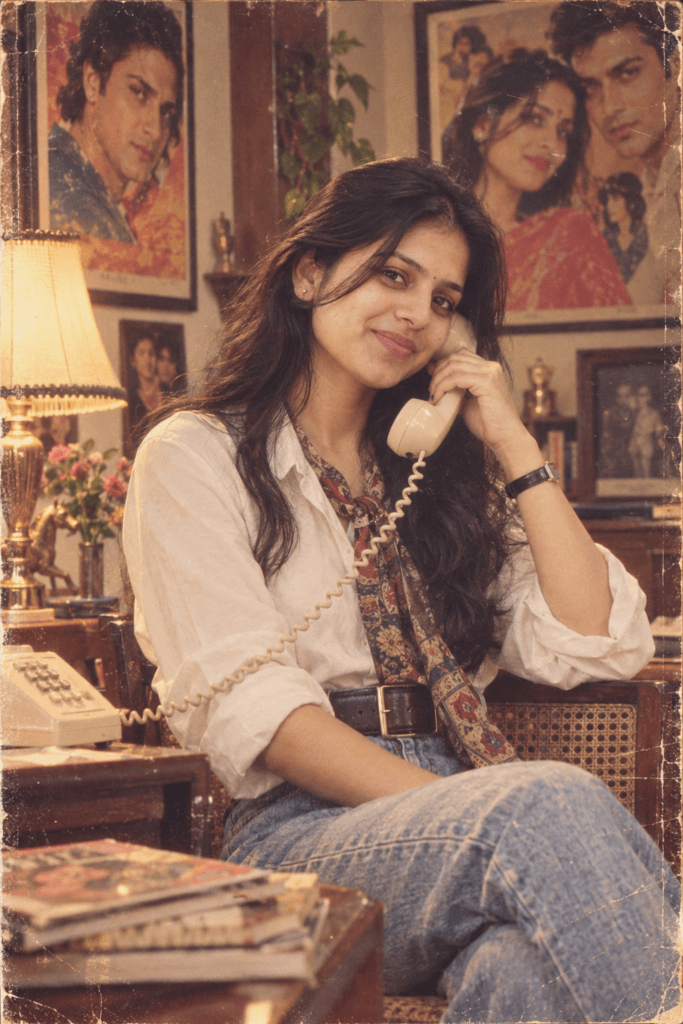
Transform the uploaded photo into an authentic 1980s Indian Bollywood-inspired indoor photograph. STRICT IDENTITY PRESERVATION: Keep the uploaded person’s exact facial identity unchanged and clearly recognizable. Preserve her exact face shape, forehead, eyebrows, eyes, nose, lips, jawline, ears, skin tone, facial proportions and distinctive features. Do not beautify, reshape, replace, redesign or alter her face. She must look like the same real person from the uploaded photo. SCENE: Create a natural, candid-looking indoor photograph of the woman sitting comfortably in a vintage Indian living room or old-fashioned Bollywood-inspired room. She is seated casually on a vintage cane or wooden chair beside a small wooden table. She is holding a classic beige/cream-colored landline telephone receiver to her ear, as if casually talking on the phone. Her expression is relaxed and naturally smiling, not posing dramatically. POSE: One hand holds the old telephone receiver near her ear. The other hand rests naturally on her lap or near the table. Natural relaxed posture. No romantic pose. No exaggerated model pose. CLOTHING: Dress her in authentic late-1970s/1980s Indian fashion: a loose white or cream button-up shirt with slightly rolled sleeves, high-waisted light-blue vintage jeans, a wide dark leather belt with a large rectangular buckle, and a colorful retro printed silk scarf loosely tied around her neck. Add simple period-appropriate earrings and a classic vintage wristwatch. Avoid modern fashion, modern logos and contemporary accessories. HAIR & MAKEUP: Use authentic 1980s Indian hairstyle: long voluminous dark hair with a natural side part, soft waves and slightly fuller roots. Keep the hairstyle realistic rather than exaggerated. Very subtle vintage Indian makeup, natural skin texture, softly defined eyes and natural lips. Do not make the skin perfectly smooth or plastic-looking. BACKGROUND: The room should strongly resemble an authentic middle-class Indian home from the 1980s. Include a wooden cabinet, vintage table lamp with a fabric shade, old books and magazines, decorative objects, indoor plants and warm wooden furniture. On the wall behind her, include several colorful vintage Indian Bollywood movie posters from the 1980s. The posters should be visibly aged, slightly faded and printed on old paper, creating the feeling of an authentic Bollywood film-loving household. Keep the posters as background elements rather than the main subject. PHOTOGRAPHY: Make it look like a genuine photograph taken in India during the 1980s using an analogue 35mm camera. Use warm tungsten indoor lighting mixed with soft ambient light. Slightly warm color cast. Muted but rich vintage colors. Natural shadows. Soft lens rendering. Fine visible 35mm film grain. Subtle film halation. Slightly faded colors. Very mild film scratches and dust. Natural exposure imperfections. Slightly imperfect focus and realistic photographic texture. COMPOSITION: Vertical portrait photograph. Medium-full shot showing the woman from approximately the knees upward. Keep the woman as the clear main subject. The telephone, table, lamp, furniture and Bollywood posters should remain visible around her. Use a natural eye-level camera angle. Do not make it look like a professional modern fashion photoshoot. REALISM: The final image must look like a real old photograph discovered in a family photo album from the 1980s. It should feel candid, nostalgic and genuinely photographed. NOT a painting. NOT an illustration. NOT a modern digital recreation. NOT glossy. NOT HDR. NOT ultra-sharp. NOT plastic-looking. NOT AI-looking. IMPORTANT: Do not add extra people. Do not add unnecessary objects. Do not add modern electronics. Do not add smartphones. Do not add modern furniture. Do not add text or watermarks. Do not change the person’s identity. The final result should look like an authentic vintage Indian Bollywood-era indoor photograph, with the uploaded person’s exact face preserved.
4. 80s Vintage Road Trip
Before
After
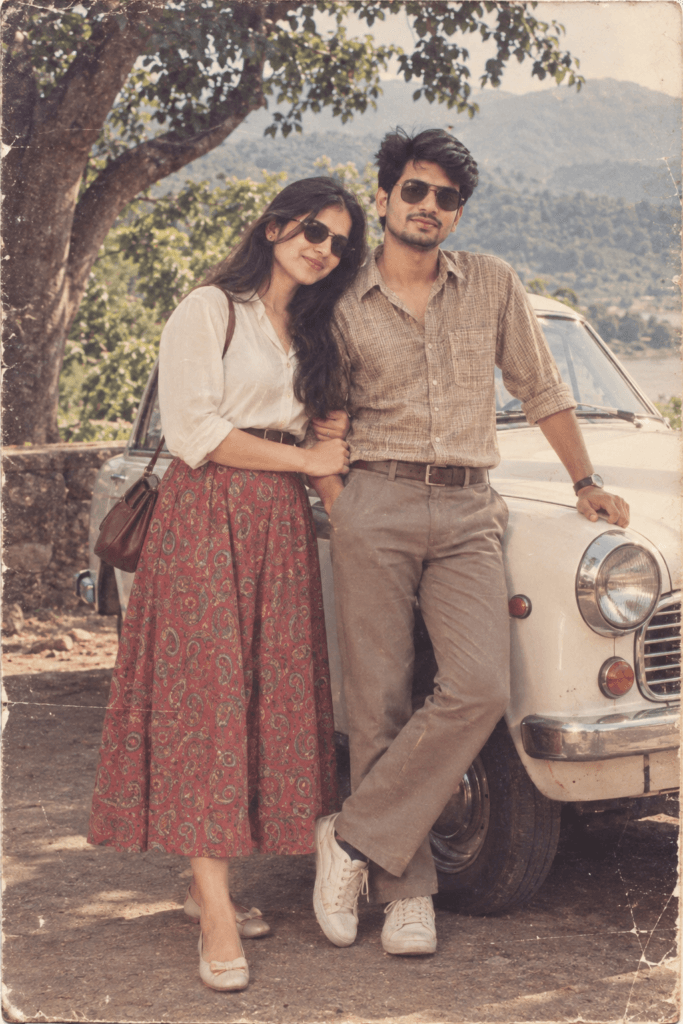
Transform the uploaded photo into an authentic 1980s Indian Bollywood-style vintage photograph. Preserve both people’s exact facial identity, face shape, features, skin tone and natural appearance. Do not beautify or alter their faces. Show the couple casually standing beside a classic 1970s–80s Indian vintage car in a green outdoor setting with large trees and distant hills. Give them simple authentic 1980s outfits, hairstyles and sunglasses. Keep the pose natural and relaxed, like a genuine old family photograph. Use soft natural daylight, warm faded colors, subtle 35mm film grain, slight film scratches, gentle lens softness and realistic skin texture. Vertical full-body composition. No modern objects, no extra people, no text, no logos, no watermark. The final image must look like a real nostalgic 1980s Indian photograph, not AI-generated, not a painting and not overly cinematic.
5. Vintage 1980s Roadside Style
Before
After
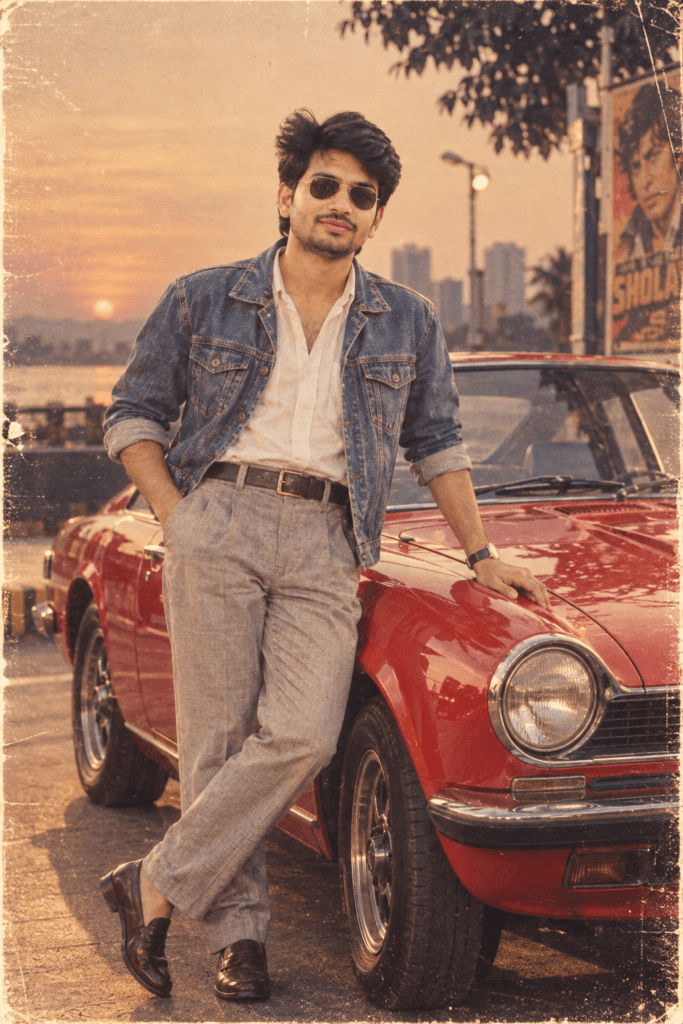
A stylish 1980s retro fashion photoshoot featuring a confident young man standing beside a classic vintage red sports car, wearing authentic 80s-inspired fashion, denim jacket, fitted shirt, high-waisted trousers, leather shoes and sunglasses. Warm cinematic sunset lighting, vintage film grain, slightly faded colors, dramatic shadows, glossy red car reflecting the surroundings, urban roadside setting, nostalgic Bollywood-inspired aesthetic, realistic skin texture, natural pose, full-body composition, 35mm film photography, shallow depth of field, highly detailed, photorealistic, cinematic color grading, authentic 1980s atmosphere.
6. Retro 80s College Vibes
Before
After
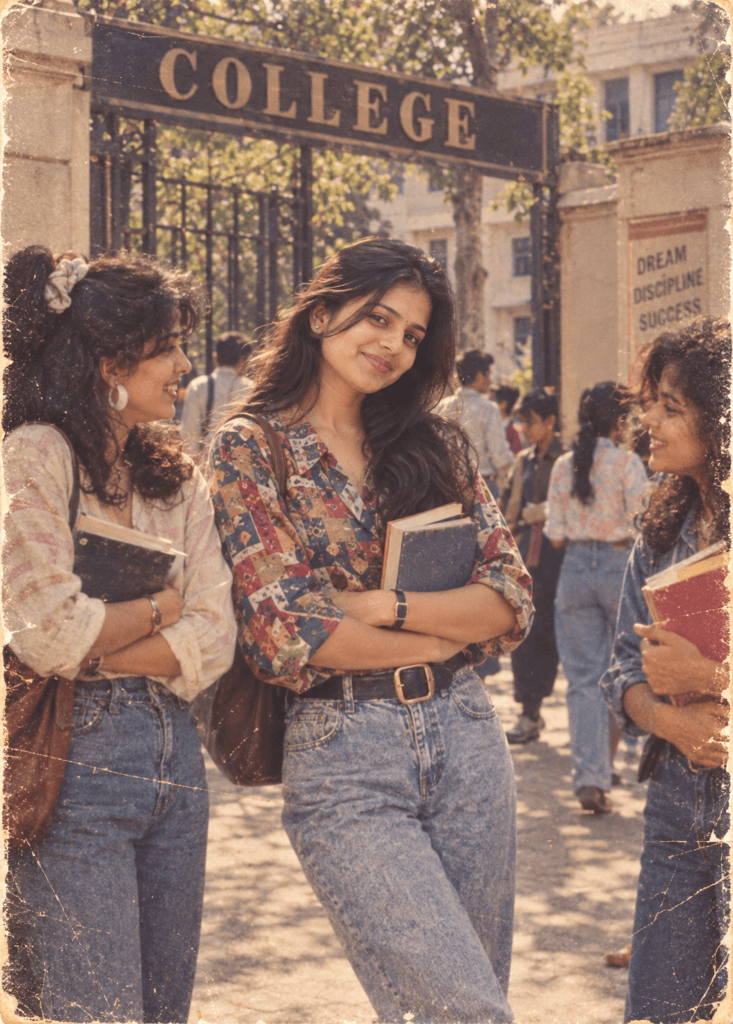
Transform the uploaded photo into an authentic 1980s Indian college photograph. Keep the person’s exact facial identity, facial features, skin tone and natural appearance unchanged and clearly recognizable. Show the person as a stylish 1980s Indian college student, standing casually with friends outside an old college gate. Add a large vintage “COLLEGE” sign, old campus buildings, trees and a few students in the background. Use authentic 1980s fashion: colorful printed shirt/blouse, high-waisted faded jeans, retro sunglasses, hoop earrings, simple vintage accessories and natural voluminous hairstyle. Natural candid pose and relaxed smile, like a real college photograph. Warm afternoon sunlight, slightly faded colors, soft focus, realistic skin texture, 35mm analogue film grain, subtle scratches, dusty vintage texture and slightly worn photo edges. Vertical full-body composition. Nostalgic Indian Bollywood-era atmosphere. No modern objects, no smartphones, no extra unnecessary details, no watermark. Make it look like a genuine old 1980s photograph, not AI-generated, not a painting or illustration.
7. Vintage Outdoor Bollywood Fashion Portrait Prompt
Before
After
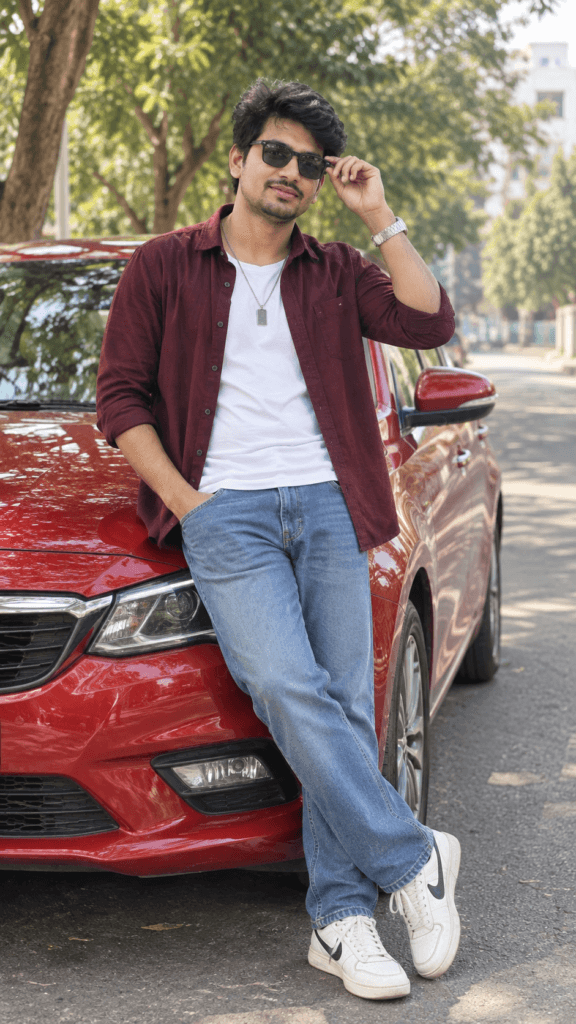
Using the uploaded photo as the ONLY identity reference, transform the person into a stylish vintage-inspired outdoor fashion photograph. Preserve the person’s exact facial identity, face shape, facial features, skin tone, hairstyle characteristics and natural appearance. Do not change, beautify, reshape or redesign the face.
A confident young Indian man casually leaning against the front of a glossy red modern sedan, parked on a quiet tree-lined urban road. He is wearing a dark maroon/burgundy overshirt with sleeves rolled up, a plain white crew-neck T-shirt underneath, relaxed-fit blue jeans, white sneakers with a dark swoosh-style detail, a silver chain necklace with a rectangular pendant, a wristwatch and dark rectangular sunglasses.
Pose: relaxed and stylish, leaning naturally against the car’s front hood, one hand casually adjusting his sunglasses near his face and the other hand resting near his jeans pocket. Legs naturally crossed at the ankles. Confident but effortless expression.
Background: leafy green roadside with large trees, softly blurred urban surroundings, distant buildings and road elements. Keep the environment natural and uncluttered.
Photography: realistic outdoor portrait photography, soft natural daylight, shallow depth of field, realistic skin texture, natural shadows, subtle background bokeh, high facial detail, realistic fabric texture, crisp but natural image quality, slightly warm cinematic color grading.
Composition: vertical full-body portrait, approximately 9:16 aspect ratio. The man and the red car should dominate the frame. Camera at approximately eye level, slightly compressed portrait perspective.
Important: Keep the person’s identity exactly the same as the uploaded reference. Do not add extra people, motorcycles, random objects, text, logos or watermarks. Keep the car red and positioned prominently behind/alongside the person. Photorealistic, natural, stylish, realistic Indian outdoor fashion photograph.
8. 80s Summer Block Party
Before
After
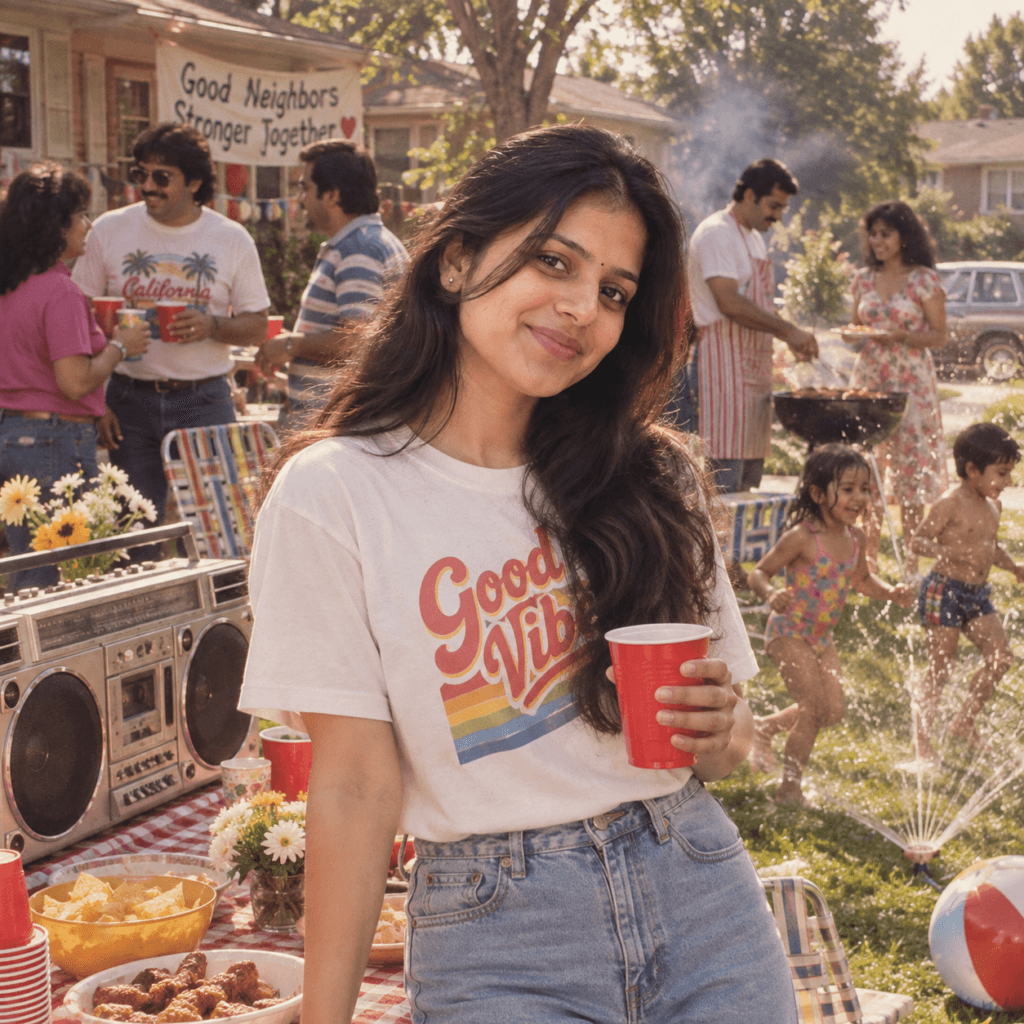
The image captures a joyful 1980s-style suburban summer gathering with a warm, nostalgic atmosphere. The main subject is a young woman standing in the foreground, wearing a casual retro T-shirt and high-waisted jeans, holding a red cup beside a vintage silver boombox.
In the background, neighbors are chatting and enjoying food, while an adult grills at the BBQ. Children are playing through a lawn sprinkler, adding a lively summer feel. Vintage outdoor furniture, flowers, balloons, an older car, and tree-lined homes complete the scene.
The overall image has warm sunlight, slightly faded colors, soft 35mm film grain and natural photographic imperfections, making it feel like a genuine old family photograph from the 1980s.
9. Bollywood Heroine Look
Before
After
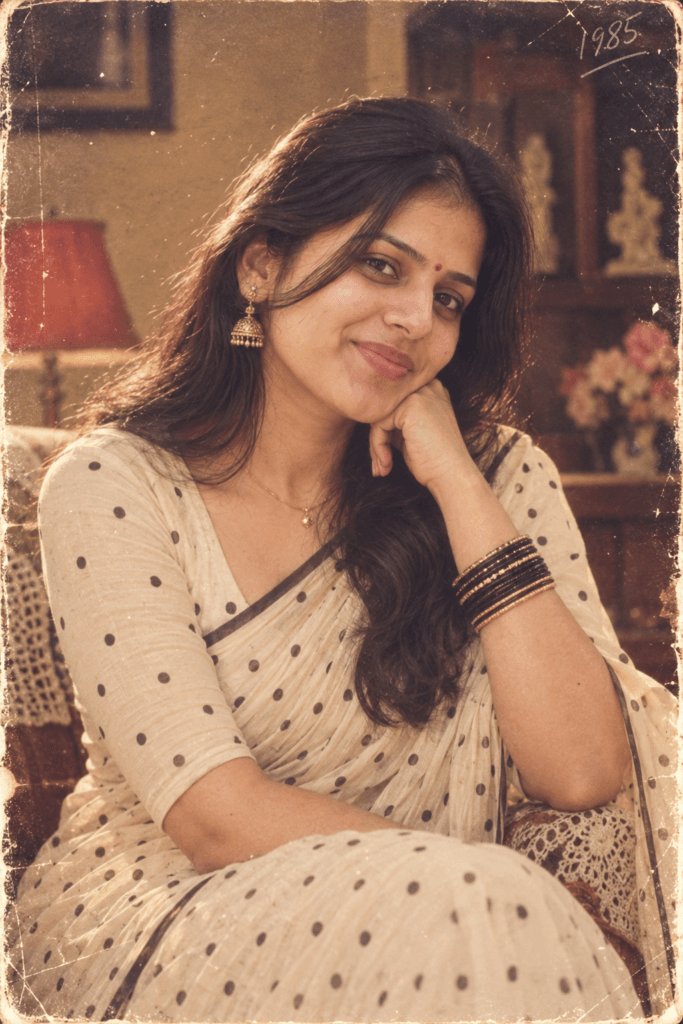
Using the uploaded photo as the ONLY identity reference, transform the woman into an authentic vintage 1980s Indian portrait photograph.
STRICT IDENTITY PRESERVATION: Keep her exact facial identity unchanged and clearly recognizable. Preserve her face shape, forehead, eyebrows, eyes, nose, lips, jawline, ears, skin tone, facial proportions and distinctive natural features. Do not beautify, reshape, slim, enlarge or redesign her face. She must look like the same real person from the reference photo.
CLOTHING: Dress her in a simple, elegant off-white/cream 1980s Indian saree with small black polka-dot print, featuring a very thin dark contrasting border. Use a simple matching short-sleeve blouse with the same subtle polka-dot pattern. The saree should look like an everyday/classic middle-class Indian saree from the 1980s, not a modern designer saree.
JEWELLERY: Add authentic understated 1980s Indian jewellery — traditional gold jhumka earrings, a very delicate gold chain with a tiny pendant, several thin black and gold bangles on one wrist, and minimal traditional jewellery. Avoid heavy modern bridal jewellery.
MAKEUP & FACE: Natural 1980s Indian makeup. A small round dark-red/maroon bindi centered on the forehead, softly defined eyebrows, subtly kajal-lined eyes, natural warm complexion and muted rose/red lipstick. Keep realistic skin texture, slight natural imperfections and no modern beauty retouching.
HAIR: Authentic 1980s Indian hairstyle — voluminous shoulder-length dark hair, naturally wavy with a soft side part and fuller roots. Slightly feathered vintage styling, but still realistic and natural. Do not make the hair excessively large or artificial.
POSE: Waist-up portrait. She is seated comfortably and naturally, with one elbow resting casually and one hand gently supporting her chin/cheek. Look directly toward the camera with a calm, confident, subtle smile. The pose should feel like an old family portrait rather than a modern fashion photoshoot.
BACKGROUND: Warm, softly blurred indoor Indian home environment from the 1980s. Use a simple beige/brown interior with warm wooden furniture, soft curtains, subtle decorative objects and warm ambient lighting. Keep the background understated so the woman remains the main focus.
LIGHTING: Warm golden indoor tungsten lighting coming gently from the side/back, creating a soft glow around the hair and natural shadows on the face. Slightly underexposed vintage exposure with gentle highlights.
PHOTOGRAPHY: Authentic 1980s Indian analogue 35mm film photography. Warm sepia-tinted color palette, slightly faded cream and brown tones, soft lens rendering, mild focus softness, realistic skin texture, subtle 35mm film grain, fine dust particles, tiny film scratches, light leaks, slight color fading, gentle vignette and naturally worn photograph edges.
Add a small handwritten-style “1985” in the upper-right corner, integrated naturally into the aged photograph like a handwritten date on an old family photo.
IMPORTANT: The final image must look like a genuine photograph discovered in an old Indian family photo album from around 1985. It should feel authentic, nostalgic and naturally photographed — not a painting, not an illustration, not a modern AI portrait, not glossy, not HDR, not overly sharp and not fashion-editorial.
No extra people, no modern objects, no smartphone, no modern jewellery, no modern furniture, no logos, no watermark.
10. 1980s Wedding Look
Before
After
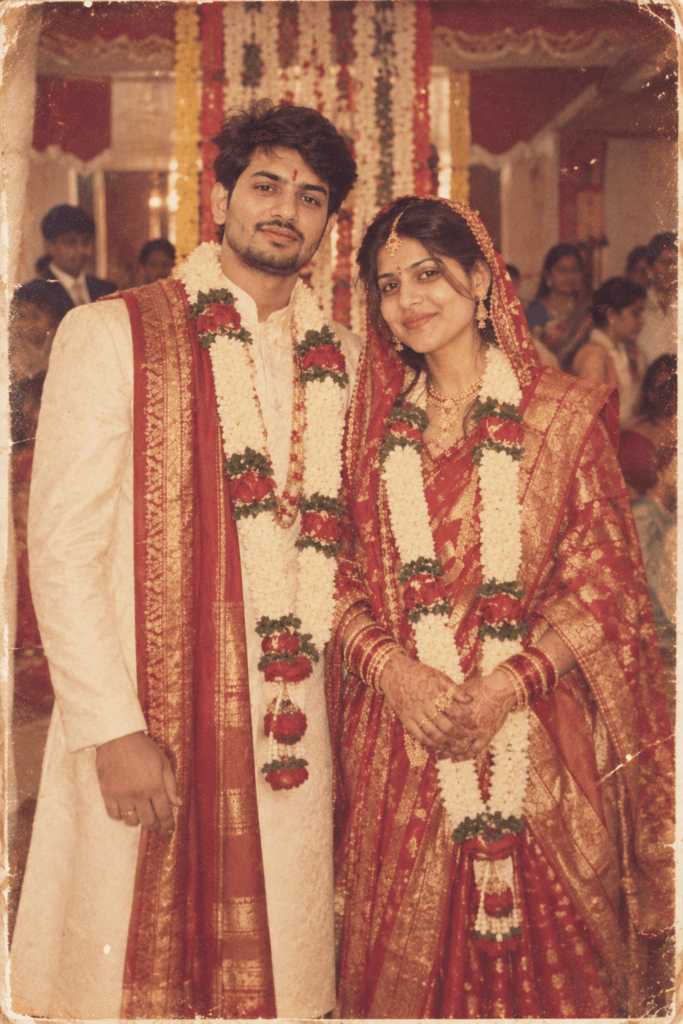
Using the uploaded photo as the ONLY identity reference for the two people, create an authentic vintage Indian wedding photograph from the late 1970s–1980s.
STRICT IDENTITY PRESERVATION: Preserve both people’s exact facial identities from the uploaded reference. Keep their face shapes, forehead, eyebrows, eyes, nose, lips, jawline, ears, skin tone, facial proportions, hairstyle characteristics and distinctive natural features unchanged and clearly recognizable. Do not beautify, reshape, slim, enlarge, replace or redesign either face.
COUPLE & POSE: Show the same man and woman standing naturally together as a newly married Indian couple during their wedding ceremony. The man stands on the left and the woman on the right, maintaining a natural side-by-side position. Both face the camera with relaxed, gentle expressions and subtle smiles. Their posture should feel like a genuine family wedding photograph rather than a professional photoshoot.
GROOM: Dress him in a traditional cream/off-white Indian wedding sherwani or kurta with a long deep red/maroon embroidered stole/dupatta draped over his shoulders. Add a traditional floral wedding garland made from white flowers with red roses. Keep the styling simple and authentic to an Indian wedding from the 1980s.
BRIDE: Dress her in a traditional deep red/maroon Banarasi-style silk saree with rich golden woven patterns and a broad traditional gold border. Drape a matching red-gold pallu/veil naturally over her head. Add a traditional red bindi, simple maang tikka, gold earrings/jhumkas, traditional gold necklace, bangles and other period-appropriate bridal jewellery. Add a long white floral garland with red roses matching the groom’s garland.
IMPORTANT BRIDAL STYLE: Keep the bride’s styling traditional and authentic rather than modern or overly glamorous. Use classic Indian wedding makeup, natural skin texture, defined kajal eyes, red lipstick and a traditional bindi.
WEDDING BACKGROUND: Create an authentic Indian wedding ceremony environment from the 1980s. Behind the couple, include traditional wedding decorations with vertical strings of white jasmine/marigold flowers, red flowers, red and cream fabric drapes, simple floral arrangements and warm decorative lighting. The background should look like a real Indian wedding hall or family wedding venue.
Include a few softly blurred wedding guests/family members in the distant background, naturally seated or standing, but keep them secondary and out of focus. Do not make any background person prominent.
PHOTOGRAPHY: Make it look like a genuine photograph taken in India during the 1980s with an analogue 35mm film camera. Warm tungsten/indoor wedding lighting, slightly warm color cast, muted but rich reds and golds, natural exposure, soft lens rendering, mild focus imperfections, realistic skin texture, subtle film grain, slight film halation, faded colors, tiny dust particles, light scratches and naturally aged photographic texture.
VINTAGE PHOTO EFFECT: Add subtle old-family-album characteristics — slightly faded print, gentle sepia warmth, worn edges, very mild scratches and dust, soft contrast and imperfect exposure. Do not overdo the damage; the people must remain clearly visible.
COMPOSITION: Vertical portrait photograph, approximately 4:5 aspect ratio, showing both people from approximately thighs/waist upward. Keep the couple centered and dominant in the frame. The groom remains on the left and bride on the right. Wedding decorations should fill the background naturally.
REALISM: The final image must look like a real old wedding photograph discovered in a family photo album from around 1985. It should feel candid, nostalgic and genuinely photographed.
DO NOT: change either person’s identity, add modern clothing, modern jewellery, smartphones, modern furniture, contemporary decorations, cinematic fantasy effects, excessive makeup, plastic skin, HDR, excessive sharpness, painting, illustration or AI-looking facial features.
No text, no captions, no logos and no watermark.
If the first result doesn’t match: don’t rewrite the whole prompt – reply with a short, specific correction instead, e.g. “keep the exact same face shape, just add more grain.” ChatGPT edits its own last output far better than it follows a brand-new prompt from scratch.
These 1980s AI photo prompts work best when you upload a clear reference photo first. You can use these ChatGPT prompts to create different 80s-inspired styles while keeping the original person recognizable.
Quick tips
– Start with a high-resolution, front-facing photo – side angles and low light both hurt accuracy.
– Correct in small steps in the same chat rather than starting a new prompt (see above) – this is the single biggest lever for a good result.
Want AI-powered tools like this built into your own product or workflow?
Codelent Technologies builds custom software and AI-driven solutions for businesses across industries. Get in touch to talk about it.
Looking for more AI video ideas? Check our 10 Best AI Image to Video Tools guide.